The IACTS orations honour the pioneers of cardiovascular and thoracic surgery in India — commemorative lectures delivered at IACTSCON by distinguished members of the association.

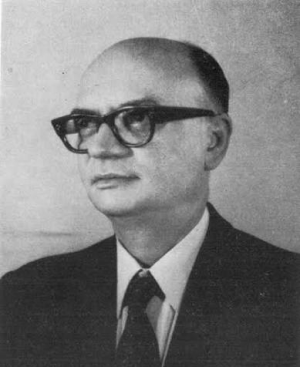
Dr C S Sadasivan was a great pioneer in the field of cardiovascular and thoracic surgery who after being trained in many centres started the Masters course in our speciality in the Madras Medical College in 1959. He was born in 1916 in Andhra Pradesh. He graduated with distinction from the Andhra Medical College, Vishakapatnam. He did his Masters in Surgery under Dr. Sheppard and was a recipient of the Ebden Memorial Medal. In 1956, he went abroad for training under pioneers like Sir Russel Brock, Dr. Andrew Logan, Professor Crawford, Professor Dubost and many more. He returned to Madras in 1957 and joined the Madras Medical College and Government General Hospital, as a Professor in Cardio-Thoracic Surgery. Dr. Sadasivan had a strong desire to make India self-sufficient in all aspects of cardio thoracic surgery. He started a two years course Masters in Cardio Thoracic Surgery in 1959. He was conferred the Padma Shri Award in 1969 in the field of medicine for his outstanding contributions to cardiothoracic surgery. Our association instituted an oration in the memory of Dr. C.S. Sadasivan in the year 1980.
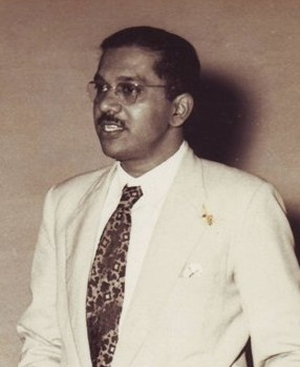
Prof. Godrej Sorabjee Karai occupies a distinguished place in the history of Indian thoracic surgery. A visionary surgeon and gifted teacher, he was among the pioneers who transformed thoracic surgery into an independent specialty in India. He graduated from Calcutta Medical College in 1945 and travelled to the United Kingdom for higher surgical training. Major A. T. Andreasen introduced him to the principles of experimental surgical research, which remained a lifelong passion. He obtained the Fellowship of the Royal College of Surgeons of England in 1953 and later trained in thoracic surgery under the renowned Sir Thomas Holmes Sellors, whose influence inspired his lifelong interest in oesophageal and thoracic surgery. After returning to India, Prof. Karai continued his academic pursuits. He was awarded an Indian Council of Medical Research Fellowship under Professor A. K. Basu at the Institute of Postgraduate Medical Education and Research, Kolkata. He also received the prestigious Rockefeller Fellowship in Thoracic Surgery, which enabled advanced training at Harvard Medical School and Massachusetts General Hospital, Boston. There he gained first-hand experience in the latest developments in thoracic and cardiovascular surgery, helping introduce modern surgical techniques into India. In 1959, he founded the Department of Thoracic and Cardiovascular Surgery and Experimental Surgery at National Medical College, Calcutta. In 1962, he became the first Asian surgeon to receive the prestigious Evarts A. Graham Memorial Travelling Fellowship awarded by the American Association for Thoracic Surgery (AATS). His landmark publications included 'Carcinoma of the Lung: A Record and Analysis of 100 Cases' (1967), one of India's earliest comprehensive studies on lung cancer, and 'Role of Surgery in Pulmonary Tuberculosis in India Today' (1970). Beyond his academic achievements, Prof. Karai was deeply respected for his compassion and mentorship. He guided generations of young surgeons and worked closely with Mother Teresa in caring for many of Kolkata's most disadvantaged patients. He passed away on July 25, 1978, while serving as President of the Association of Thoracic and Cardiovascular Surgeons of India.
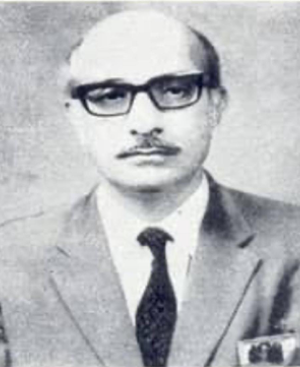
Dr P K Sen was the first to perform heart transplant in our country and the fourth person in the world achieving it just 75 days after the first. He achieved this after many years of work on canine models. To accomplish his feat, Sen navigated Cold War tensions and opportunities, situating his interests into those of his hospital, municipal authorities, Indian nationalism, Soviet and American authorities, the Rockefeller Foundation, and others. He was born on 7 December 1915 and had his early education in Jamtada. He attended the Victoria College of Sciences and in 1933 did his MBBS from the G S Medical college Bombay. He completed his M S in 1940 from Bombay and went to Pennsylvania on a Rockefeller grant. In 1952 he was appointed Honorary Surgeon in King Edward Memorial hospital Bombay. An excellent teacher, Dr. Sen enlivened his lectures with poetry, philosophy, and quotations from the history of medical science. He had a charismatic influence upon his students. When Sen ventured beyond the subject of surgery, he did so with authority, for he was both a poet and a painter; his paintings were exhibited twice in India and once in the United States.
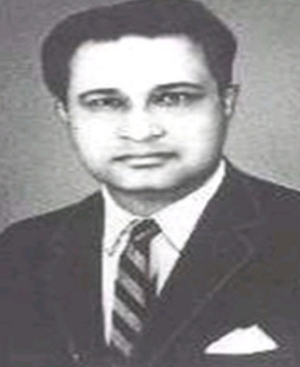
Prof. Kersi Nusserwanji Dastur was born at Surat on November 21, 1917. After completing his Bachelor of Science, he joined Grant Medical College, Bombay, where he earned his Master's degree in Surgery before proceeding to England to obtain the Fellowship of the Royal College of Surgeons. He returned to India in 1946 and was appointed Honorary Assistant Professor of Surgery at Topiwala National Medical College and Nair Hospital. Alongside his academic responsibilities, he built a successful private surgical practice, earning widespread recognition for his excellence in surgery. His work in tuberculosis sparked a lifelong interest in thoracic surgery, which naturally expanded into cardiac surgery. Determined to establish cardiac surgery at Nair Hospital, he devoted his energy and resources to developing the specialty. By 1954, he had begun performing closed-heart surgeries. Inspired by the pioneering work of John Gibbon, Prof. Dastur designed an indigenous heart-lung machine and successfully closed an atrial septal defect (ASD) using it in 1961. He continued to perform cardiac surgeries with this original heart-lung machine, transporting it to private hospitals both within and outside Mumbai. Even after his retirement, he remained actively involved in experimental research and pursued several scientific interests.
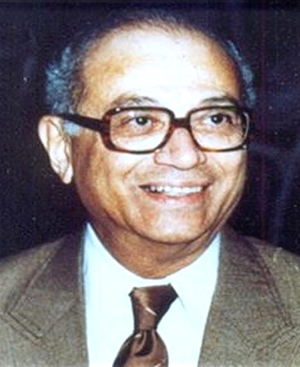
Dr. Meherji P. Mehta was one of the pioneers in cardiovascular and thoracic surgery, a great teacher, and one of the most beloved personalities in surgery. Born on April 5, 1917, at Navsari, he completed his early education at Elphinstone College and St. Xavier's College and graduated from Grant Medical College and J.J. Hospital, Bombay, in 1939. He earned his Master's degree in Surgery from Bombay University in 1942, securing distinction, and then joined the Armed Forces. He later proceeded to the United Kingdom and joined the Thoracic Surgery Unit at Frenchay Hospital, Bristol, where he became a Fellow of the Royal Colleges of Surgeons of England and Edinburgh. In 1951, Dr. Mehta returned to India and joined the Parsee General Hospital. He went on to become Professor of Surgery and Head of the Department of Thoracic and Cardiovascular Surgery at J.J. Hospital. He was elected President of the Association of Thoracic Surgeons of India in 1973 and held the post for three years. In 1976, he was elected President of the Association of Surgeons of India. In 1963, he performed his first open-heart operation at J.J. Hospital using an indigenously designed heart-lung machine. The machine continued to be used successfully for several years at J.J. Hospital. Dr. Mehta was also the first to use biological valves. He passed away on July 7, 1983.
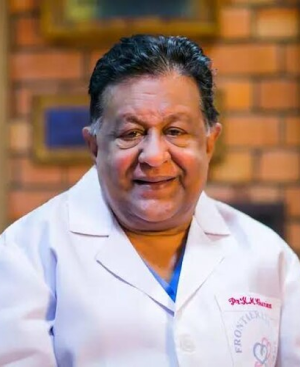
Dr. Kotturathu Mammen Cherian was a world-renowned Indian heart surgeon and a pioneer of cardiac surgery in India. Over a 50-year career, he performed more than 46,000 surgeries and introduced several historic breakthroughs. He graduated from Kasturba Medical College, Manipal, and earned his FRACS in Australia. He began his practice in India in 1975 at the Railway Hospital, Perambur, Chennai. Dr. Cherian performed the first successful Coronary Artery Bypass Surgery in India in 1975 and the first combined Heart-Lung Transplantation. He was a prolific builder of medical and educational institutions. He served as the Founding Vice President of The Madras Medical Mission and Founding Chairman of the Pondicherry Institute of Medical Sciences. He founded Frontier Lifeline Hospital and Frontier Mediville, India's first Medical SEZ and Science Park. His philanthropic efforts led to the establishment of the St. Gregorios Cardiovascular Centre in Kerala, while his educational trust established an international school in Puducherry. He is also celebrated as the father of the Physician Assistant profession in India, having introduced it in 1992. His global contributions earned him numerous honors. He received the Padma Shri in 1991 and served as Honorary Surgeon to the President of India. He was the first Indian member of the American Association for Thoracic Surgery to join its Founder Circle in 2016. He was also the only Indian to serve as President of the World Society of Cardio Thoracic Surgeons in 2010 and received the Harvard Medical Excellence Award. He passed away in 2025. The Consortium of Accredited Healthcare Organizations established the Dr. K. M. Cherian Endowment Award to honor his legacy by recognizing research in patient safety and medical accessibility. His life is chronicled in the 2015 biography Hand of God by Priya M. Menon, and he released his autobiography on January 24, 2025. Dr. Cherian leaves behind a monumental legacy of saved lives and generations of mentored surgeons.
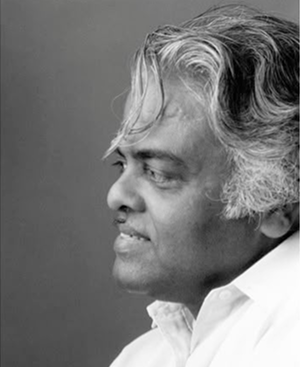
Dr. Solomon Victor was one of India's most distinguished cardiothoracic surgeons, educators, and researchers. He trained at Madras Medical College, where he completed his MBBS, MS, and M.Ch. in 1969. Uniquely, he earned both the Membership of the Royal College of Physicians (MRCP) and the Fellowship of the Royal College of Surgeons (FRCS). He underwent advanced training at the National Heart Hospital, London, from 1969 to 1970 under the pioneering cardiac surgeon Mr. Donald Ross, mastering the early techniques of open-heart surgery. He served as Chief Surgeon and Professor of Cardiothoracic Surgery at the Government General Hospital and Madras Medical College, Chennai, from 1970 to 1988. During this period, he pioneered Chennai's first advanced dedicated open-heart surgery program, established institutional surgical units, mentored numerous M.Ch. trainees, and performed thousands of life-saving operations, particularly for economically disadvantaged patients. In 1989, he founded The Heart Institute at Vijaya Hospital, Chennai, where he served as Director until 2006. He also established the Donald Ross Cardiac Museum in 1995 and remained its Lifetime Curator. Dr. Victor was elected President of the Association of Thoracic and Cardiovascular Surgeons of India (ATCVSI) and became the founding Editor-in-Chief of the Indian Journal of Thoracic and Cardiovascular Surgery (IJTCVS). He also served as Chief Technical Advisor to the Indian Society of Extra Corporeal Technology (ISECT) and was an International Editorial Board Consultant for the journal Heart, Lung and Circulation, providing guidance on comparative morphology research from South Asia. His distinguished career was recognized with numerous honors, including the Hallett Prize, Hunterian Professorship, and the Paul Harris Fellowship. He delivered the prestigious Hunterian Lecture in London on cross-species valve morphology, and his 'KISS' (Keep It Simple and Safe) concept became widely known in the field of cardiac surgery. A prolific scholar, gifted teacher, and inspirational leader, Dr. Solomon Victor passed away in Chennai in 2006, leaving behind an enduring legacy in cardiothoracic surgery, research, and medical education.
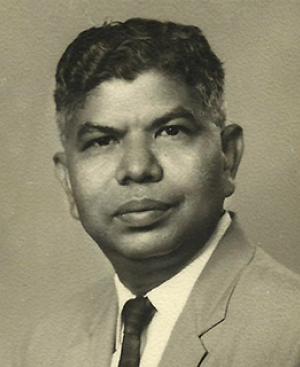
Dr Mathuram Santosham was born in 1913. He joined the Madras Medical College in 1931 for his MBBS. He joined the King Edward VII memorial Tuberculosis Institute at Chetpet, Madras. He started his Lung Clinic in Egmore, Madras in 1938 and would treat tuberculosis patients at home with artificial pneumothorax. He took active part in the Quit India movement. After the World War he built the Abraham Santosham Memorial Sanatorium. He did many surgical procedures for tuberculosis including Eloesser flaps. He worked at the Bellevue hospital, New York and at the North Carolina Sanatorium. He wrote the early Indian books on Tuberculosis. He also served as a member of the Parliament and in various capacities with the government.
 Login
Login